How Long Does Fertilization Take After ICSI?
How Long Does Fertilization Take After ICSI?
Fertilisation after ICSI typically occurs within a predictable timeframe. While the sperm is injected directly into the egg, the biological process of fertilisation takes several hours to complete. In most cases, fertilisation is confirmed around 16 to 18 hours after the procedure.
Key Takeaways
- Fertilisation after ICSI is not immediate
- It usually takes 16 to 18 hours to confirm fertilisation
- The process happens inside the egg after sperm injection
- Embryologists check for specific signs of fertilisation
- Timing is consistent across most IVF cycles
Starting With Your Question and What It Really Means
If you are undergoing IVF with ICSI, you are likely wondering how long it takes for fertilisation to happen after the procedure. This is one of the most common questions patients have, especially during the waiting period after egg collection.
This question often reflects a mix of anticipation and uncertainty. After an important step like ICSI, it is natural to want immediate results and reassurance that everything is progressing as expected.
Understanding the fertilisation timeline can help you manage expectations and feel more prepared for the next update from your clinic.
What Happens During ICSI
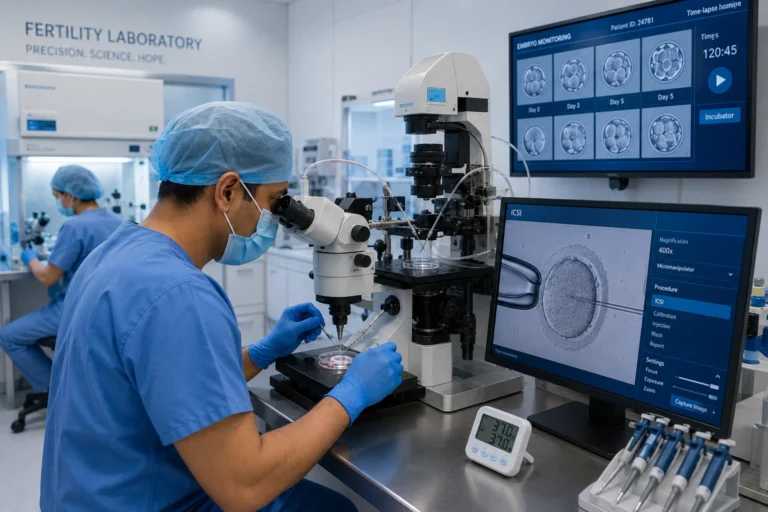
Intracytoplasmic Sperm Injection is a laboratory technique where a single sperm is injected directly into an egg.
What the procedure involves
- Eggs are collected from the ovaries
- A sperm sample is prepared
- A single sperm is selected
- The sperm is injected into the egg
What this means
Although the sperm is placed inside the egg, fertilisation still requires a series of biological steps to occur.
Does Fertilization Happen Immediately After ICSI?
Fertilisation does not happen instantly after sperm injection.
What happens inside the egg?
- The sperm begins to interact with the egg’s internal structures
- The egg becomes activated
- Genetic material from both sperm and egg starts to organise
Why it takes time
These processes are complex and must occur in a specific sequence for fertilisation to be successful.
What this means
Even with direct injection, fertilisation is a gradual biological process rather than an immediate event.
How Long Does Fertilization Take After ICSI?
The fertilisation process typically follows a well-established timeline.
Standard timeframe
- Fertilisation occurs within hours after injection
- It is usually confirmed 16 to 18 hours later
What embryologists check
- Presence of two pronuclei (one from the egg and one from the sperm)
- Signs of normal fertilisation
What this means
You will usually receive confirmation of fertilisation the day after your ICSI procedure.
Why Clinics Wait 16 to 18 Hours
The timing of the fertilisation check is carefully chosen.
Reasons for this timing
- Allows enough time for fertilisation to occur
- Ensures accurate identification of normal development
- Avoids misinterpreting early or delayed changes
What this means
Checking too early or too late could give misleading information, so timing is standardised.
What Happens After Fertilization Is Confirmed?
Once fertilisation is confirmed, embryo development begins.
Next stages
- Cells begin dividing
- Embryos are monitored over several days
- The best embryo is selected for transfer
Typical timeline
- Day 1: Fertilisation confirmed
- Day 2 to 5: Embryo growth
- Day 3 or 5: Either embryos continue developing or are frozen depending on the treatment
What this means
Fertilisation is the starting point for embryo development, not the final step.
What If Fertilization Takes Longer?
In some cases, fertilisation signs may appear slightly later.
Possible reasons
- Variations in egg activation
- Individual biological differences
- Laboratory observation timing
What this means
Small variations can occur, but most fertilisation follows the standard timeframe.
What If Fertilization Does Not Occur?
Not all eggs will fertilise, even with ICSI.
Possible factors
- Egg quality
- Sperm quality
- Issues with egg activation
What this means
A lack of fertilisation does not always predict future outcomes, and your care team will guide next steps.
Emotional Considerations During the Waiting Period
The time between ICSI and fertilisation results can feel like one of the longest parts of the process. Even though it is usually less than a day, the anticipation can make it feel much longer.
It is completely normal to feel anxious or hopeful during this time. You may find yourself thinking about every possible outcome while waiting for your clinic to call.
Having a clear understanding of the timeline can help reduce uncertainty and make the wait feel more manageable.
When Will You Get Your Results?
Clinics usually provide updates at specific times.
Typical communication
- Day of egg collection: ICSI completed
- Next day: Fertilisation results shared
What this means
You can usually expect to hear from your clinic within 24 hours of the procedure.
Common Myths About Fertilization After ICSI
Myth 1: Fertilisation is instant
Fertilisation takes several hours and is confirmed the next day.
Myth 2: ICSI guarantees fertilisation
Even with direct injection, fertilisation is not guaranteed.
Myth 3: Faster fertilisation means better embryos
Timing alone does not determine embryo quality or success.
What This Means for Your Fertility Journey
Fertilisation after ICSI follows a consistent and carefully monitored timeline. While the process begins soon after sperm injection, confirmation takes place the following day to ensure accuracy.
Understanding this timeframe can help you feel more prepared and reduce uncertainty during treatment. Each step plays an important role in advancing toward embryo development and a potential pregnancy.
FAQs
How long after ICSI does fertilisation happen?
Fertilisation begins within hours after the sperm is injected. However, it is usually confirmed 16 to 18 hours later. This allows time for visible signs to develop.
Why do clinics wait until the next day to check?
Clinics wait to ensure fertilisation has fully occurred. Checking too early may not show clear results. The timing helps provide accurate information.
Can fertilisation happen later than 18 hours?
In some cases, fertilisation signs may appear slightly later. However, most normal fertilisation is identified within the standard timeframe. Clinics monitor this carefully.
Will I feel anything when fertilisation happens?
Fertilisation occurs in the laboratory, so you will not feel it. The process is completely outside the body at this stage. Updates come from your clinic.
What percentage of eggs fertilise after ICSI?
Typically, around 70–80% percent of mature eggs fertilise. This can vary depending on individual factors. It is normal for some eggs not to fertilise.
You Do Not Have to Navigate This Alone
If you have questions about fertilisation or want to better understand your IVF timeline, speaking with a specialist can provide reassurance. A personalised consultation can help you feel informed and supported throughout your journey.
Bridge Fertility London offers expert, compassionate care tailored to your individual needs. The team is here to guide you through every stage with clarity and understanding. When you feel ready, you can book a consultation to take the next step.
Follow us on our social media channels below:
Explore our related articles below: