Can Non-Motile Sperm Be Used for ICSI
Can Non-Motile Sperm Be Used for ICSI? Fertility Experts Explain
Non-motile sperm can sometimes be used for ICSI, but only if they are still alive. While sperm movement is usually a sign of health, some sperm may be viable even if they are not moving. With advanced laboratory techniques, specialists can identify these viable sperm and use them to achieve fertilization.
Key Takeaways
- Non-motile sperm are not always dead; some may still be viable
- ICSI allows fertilization without the need for sperm movement
- Specialized tests help identify which non-motile sperm are alive
- Success depends on multiple factors, not motility alone
- Treatment plans focus on achieving a healthy pregnancy
Starting With Your Question and What It Really Means
If you have been told that your sperm are non-motile, it can feel like an overwhelming and uncertain moment. You may be wondering whether this diagnosis means your chances of having a biological child are significantly reduced or even impossible. These concerns are completely valid, especially when you are trying to understand what fertility treatment can realistically offer.
This question often arises early in the diagnostic process or after receiving semen analysis results. You might be comparing options, researching ICSI, or trying to make sense of unfamiliar medical terminology. For many people, this stage comes with a mix of hope, confusion, and the need for clear, honest guidance.
The key point to understand is that non-motile sperm does not automatically mean non-viable sperm. While movement is important in natural conception, assisted techniques like ICSI change how fertilization happens. This shift creates possibilities that would not otherwise exist, even in complex cases.
What Is ICSI and How Does It Work
ICSI, or intracytoplasmic sperm injection, is a laboratory procedure used as part of an IVF cycle.
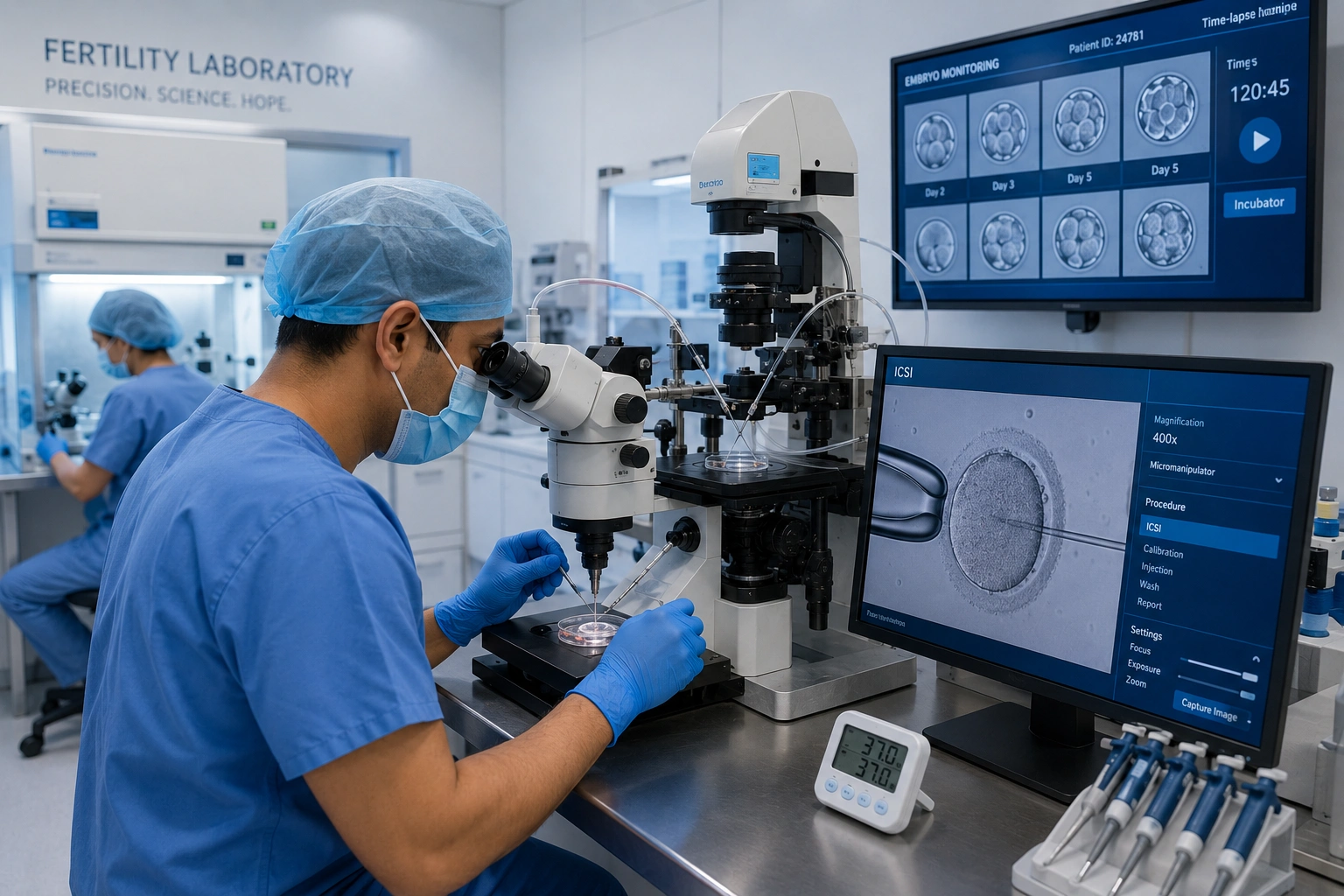
In natural conception, sperm must travel through the reproductive tract and penetrate the egg on their own. With ICSI, a fertility specialist selects a single sperm and injects it directly into the egg using precise microscopic tools.
Why is ICSI used?
ICSI is commonly recommended when there are challenges with sperm quality or fertilization. For example:
- Low sperm count
- Poor sperm motility
- Abnormal sperm shape
- Previous IVF cycles with failed fertilization
- Use of frozen or surgically retrieved sperm
Step-by-step overview
- Eggs are collected from the ovaries
- A sperm sample is prepared
- A single sperm is selected under a microscope
- The sperm is injected directly into the egg
- Fertilized eggs develop into embryos
- One or more embryos are transferred to the uterus
What this means for you
ICSI removes the need for sperm to swim to the egg. This is why it can be effective even when sperm motility is severely reduced or absent.
What Does Non-Motile Sperm Mean
Sperm motility refers to the ability of sperm to move effectively. Movement is essential in natural conception because sperm must travel to reach the egg.
Non-motile sperm are sperm that do not move. However, this does not always mean they are dead.
Key distinction
- Motility = movement
- Viability = whether the sperm is alive
Some sperm may appear still but still have intact cell structures and genetic material. This distinction is critical when considering ICSI.
Can Non-Motile Sperm Be Used for ICSI
The simple answer is yes, but only if the sperm are alive.
Why viability matters
For fertilization to occur, the sperm must activate the egg. A dead sperm cannot perform this function, even if it is injected directly.
What specialists look for
When selecting sperm for ICSI, embryologists focus on:
- Cell integrity
- Membrane function
- Structural quality
Movement alone is not the deciding factor in this context.
What this means for your treatment
If viable non-motile sperm are present, ICSI may still be a suitable and effective option. Your care team will perform additional testing to determine whether this is the case.
How Is Sperm Viability Tested
When sperm are not moving, additional laboratory techniques are used to determine whether they are alive.
Common methods
Hypo-osmotic swelling test
This test places sperm in a special solution. If the sperm is alive, its tail will swell or curl, indicating intact membranes.
Mechanical stimulation
Embryologists may gently stimulate sperm to check for any response.
Chemical activation
Certain substances can trigger movement in viable sperm.
Advanced microscopy
High-powered imaging tools allow for detailed assessment of sperm structure.
What this means
Even if a semen analysis reports no motility, further testing may reveal usable sperm.
When Non-Motile Sperm Are Seen
Non-motile sperm can be associated with several conditions.
Severe asthenozoospermia
A condition where sperm motility is extremely low or absent.
Necrozoospermia
A condition where many sperm are dead, although some may still be viable.
Medical or environmental factors
Illness, heat exposure, or lifestyle factors may temporarily affect motility.
Genetic or structural issues
Some sperm are unable to move due to structural abnormalities but may still be viable.
What If No Motile Sperm Are Found
If no motile sperm are present in a semen sample, additional options may be explored.
Testicular sperm extraction (TESE)
In some cases, sperm retrieved directly from the testes may have better viability than ejaculated sperm.
Micro-TESE
A more precise surgical technique used in complex cases.
What this means
Even when ejaculated sperm are non-motile, alternative methods may still provide viable sperm for ICSI.
Success Rates and What Really Matters
The success of ICSI using non-motile sperm depends on multiple factors.
Key influences
- Sperm viability
- Egg quality
- Age
- Embryo development
- Laboratory expertise
Important perspective
Motility is just one part of a much larger picture. Many patients achieve successful outcomes even when sperm movement is absent.
Risks and Limitations
While ICSI offers important possibilities, there are considerations to keep in mind.
Possible challenges
- Lower fertilization rates if viability is limited
- Additional testing requirements
- Increased emotional stress
- Higher treatment costs in some cases
What this means for you
Your fertility specialist will help you weigh these factors and create a plan tailored to your situation.
Emotional Considerations Around Male Factor Fertility
Receiving a diagnosis related to sperm quality can feel deeply personal. It may affect how you view your health, your future, and your role in the fertility journey.
It is important to approach this with compassion for yourself. Fertility challenges are medical conditions, not reflections of personal worth or identity.
Support can come from:
- Open conversations with your partner
- Professional counselling
- Clear communication with your care team
When Should You Talk to a Fertility Specialist
If you have concerns about sperm motility, early consultation can provide clarity and direction.
Consider speaking with a specialist if:
- You have received abnormal semen analysis results
- You are planning IVF or ICSI
- You want to understand your options
For example, if you are exploring treatment through a fertility clinic, you may find that clinics follow structured diagnostic steps to assess sperm viability and recommend appropriate care.
Common Myths About Non-Motile Sperm
Myth 1: Non-motile sperm are always dead
This is not true. Some non-motile sperm are still alive and usable.
Myth 2: Movement is required for fertilization in ICSI
ICSI bypasses the need for sperm to swim to the egg, provided the sperm selected is viable.
Myth 3: Non-motile sperm means no chance of pregnancy
Many patients still achieve successful outcomes with the right treatment approach.
What Happens If You Do Not Use ICSI
If ICSI is not used and sperm are non-motile:
- Fertilization is unlikely in standard IVF
- Natural conception may be extremely difficult
- Alternative treatment strategies may be needed
What This Means for Your Fertility Journey
A diagnosis of non-motile sperm can feel like a significant obstacle, but it does not define your outcome. Advances in fertility treatment mean that even complex cases can often be addressed with thoughtful, individualized care. Understanding the difference between motility and viability is a key step in seeing what is truly possible.
Your journey is unique, and your treatment plan should reflect that. With the right guidance, you can move forward with clarity, realistic expectations, and a sense of direction. The focus remains on achieving the best possible outcome for your circumstances.
FAQs
Can non-motile sperm fertilize an egg?
Yes, non-motile sperm can fertilize an egg if they are alive. ICSI allows a sperm to be injected directly into the egg, so movement is not required. The key factor is viability rather than motility.
How do doctors know if non-motile sperm are alive?
Doctors use tests such as the hypo-osmotic swelling test to check if sperm are alive. These tests assess whether the sperm’s membrane is functioning properly. Additional lab techniques may also be used to confirm viability.
Is ICSI successful with non-motile sperm?
ICSI can be successful if viable sperm are identified. Success depends on factors such as egg quality and overall health. Outcomes vary, but many patients achieve fertilization and pregnancy.
What if all sperm are non-motile?
Further testing is done to determine if any sperm are still alive. In some cases, sperm can be retrieved directly from the testes. Your specialist will guide you through the available options.
Does non-motile sperm mean infertility?
Non-motile sperm does not automatically mean infertility. It can make natural conception difficult, but assisted treatments like ICSI can help. A full evaluation is needed to understand your specific situation.
You Do Not Have to Navigate This Alone
If you are unsure about your next steps, speaking with a fertility specialist can help you make informed decisions with confidence. A personalized consultation allows you to explore your options and understand what treatment may look like for you.
Bridge Fertility London provides compassionate, evidence-based care tailored to your situation. The team is committed to guiding you through each stage with clarity and support. If you feel ready to take the next step, you can book a consultation to explore your options in a supportive and informed environment.
Follow us on our social media channels below:
Explore our related articles below: