What Is ICSI?
What Does ICSI Mean in Fertility Care and IVF?
ICSI is a laboratory technique used during IVF treatment to help achieve fertilization when there are challenges with sperm quality, sperm count, or previous fertilization outcomes. It is one of the most commonly used advanced fertilization methods in modern fertility care.
Many patients first hear about this technique during fertility testing or IVF planning and feel unsure about what it actually involves. The term itself can feel highly technical, but the process is more straightforward when explained step by step.
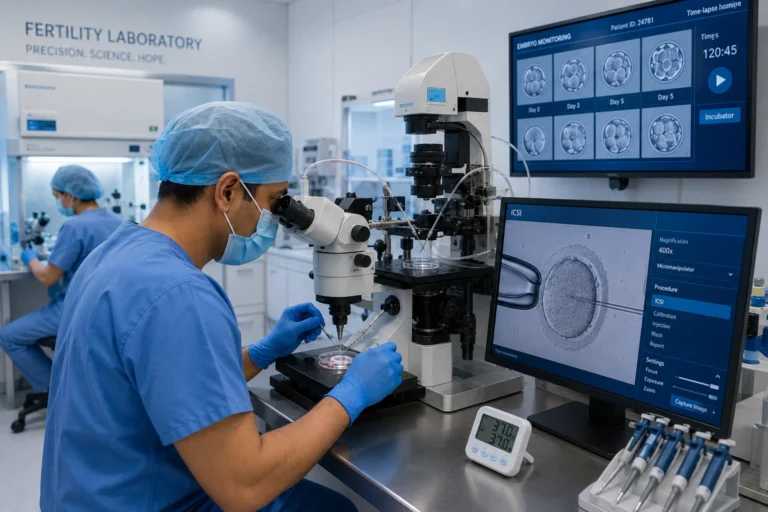
In simple terms, this method involves selecting a single sperm and injecting it directly into a mature egg in a laboratory setting. This bypasses the need for sperm to naturally penetrate the egg on its own.
It is only recommended when there is a specific clinical reason to support fertilization. It is not used in every IVF cycle.
At Bridge Fertility London, decisions about using advanced laboratory techniques are always based on medical evidence, test results, and patient history. The goal is to choose the safest and most effective approach for each individual.
Quick answer:
ICSI is a laboratory fertilization technique used in IVF where a single sperm is injected directly into an egg to assist fertilization. It is mainly used when there are sperm-related fertility issues or previous IVF fertilization challenges.
Key takeaways:
- It is an advanced fertilization technique used in IVF
- A single sperm is injected directly into each egg
- It is commonly used for male factor infertility
- It may be used after previous IVF fertilization failure
- It is not required for all IVF patients
Why ICSI Is Used in Fertility Treatment
Fertility specialists recommend this technique when there is a barrier to natural fertilization in the laboratory setting.
In standard IVF, eggs and sperm are placed together in a dish and fertilization happens naturally. However, this process depends on sperm being able to reach and penetrate the egg successfully.
When sperm cannot do this effectively, fertilization may not occur.
This technique is used to overcome that specific barrier by directly placing sperm inside the egg.
Common reasons include:
- Low sperm count
- Poor sperm movement
- Abnormal sperm shape
- Previous IVF fertilization failure
- Use of frozen or surgically retrieved sperm
- Unexplained infertility after testing
Each case is carefully assessed before a recommendation is made.
Male Factor Infertility and Its Role
One of the most common reasons for using this technique is male factor infertility.
Male factor infertility refers to sperm-related issues that affect the ability to achieve fertilization.
Common sperm issues include:
- Low concentration of sperm
- Reduced motility or movement
- Abnormal morphology or shape
- DNA fragmentation concerns
Even when sperm is present, it may not be strong enough to fertilize an egg on its own in a laboratory environment.
This technique allows embryologists to select a single healthy sperm and directly inject it into the egg to improve fertilization chances.
Previous IVF Failure and When It Is Recommended
This method is often recommended after previous IVF cycles have not resulted in fertilization.
This can be emotionally difficult for patients and may lead to further investigation.
In some cases, eggs and sperm are collected successfully, but fertilization does not occur.
This may suggest a problem at the level of sperm and egg interaction.
In such cases, a more controlled laboratory approach may be recommended in the next cycle.
Step-by-Step Process in IVF Treatment
Understanding how this technique fits into IVF helps make the process clearer.
Step 1: Fertility assessment
Patients undergo blood tests, ultrasound scans, and semen analysis.
Step 2: Diagnosis and treatment planning
A fertility specialist reviews all results and determines the best approach.
Step 3: Ovarian stimulation
Medication is used to stimulate the ovaries to produce multiple eggs.
Step 4: Egg retrieval
Eggs are collected through a minor medical procedure.
Step 5: Fertilization decision
The embryology team decides whether standard IVF or ICSI will be used.
Step 6: Laboratory fertilization
A single sperm is selected and injected into each mature egg if indicated.
Step 7: Embryo development
Fertilized eggs are monitored as they develop into embryos.
Step 8: Embryo transfer or freezing
Healthy embryos are transferred into the uterus or frozen for future use.
What Happens in the Laboratory
The laboratory is where fertilization takes place under highly controlled conditions.
Embryologists carefully manage every step of the process.
Inside the lab:
- Eggs are checked for maturity
- Sperm samples are prepared
- A single sperm is selected under a microscope
- The sperm is injected into the egg using microtools
- Fertilization is monitored over the next 24 hours
The environment is carefully controlled to protect embryo development and ensure safety.
Unexplained Infertility and Clinical Decisions
In some cases, fertility testing does not identify a clear cause of infertility.
This is known as unexplained infertility.
Even when results appear normal, fertilization issues may still exist at a microscopic level.
In these situations, fertility specialists may consider advanced fertilization techniques if previous cycles or clinical signs suggest a potential barrier.
The decision is always based on medical history and treatment outcomes.
Surgical Sperm Retrieval Cases
This technique is also used when sperm must be retrieved surgically.
This may occur when no sperm is present in the ejaculate.
In these cases:
- Sperm is collected directly from the testicles or epididymis
- Only a small number of sperm may be available
- Sperm quality may vary
Because of these limitations, direct injection into the egg is often the most effective fertilization method.
Emotional Experience of Treatment
Being recommended this technique can bring a mix of emotions.
Patients may feel:
- Relief that there is a clear plan
- Anxiety about laboratory procedures
- Uncertainty about outcomes
- Hope for improved fertilization
These feelings are completely normal.
A supportive fertility clinic will take time to explain the process clearly and answer questions in simple language.
Understanding the reason for treatment often helps reduce anxiety.
Does This Mean Something Is Wrong
Many patients worry that being advised to use this technique means something is seriously wrong.
In reality, it simply means that a specific barrier to fertilization has been identified or suspected.
It does not mean:
- That pregnancy is impossible
- That all fertility options are limited
- That natural conception will never occur
It simply means that a more precise method may improve fertilization outcomes.
Success Factors After Treatment
Even when fertilization is successful, several factors influence pregnancy outcomes.
These include:
- Egg quality
- Sperm quality
- Embryo development
- Uterine environment
This technique supports fertilization, but overall success depends on multiple biological stages.
Risks and Limitations
Although widely used and considered safe, it is important to understand limitations.
Limitations include:
- Not all eggs will fertilize
- Not all embryos will develop normally
- Pregnancy is not guaranteed
- Underlying fertility issues may still affect outcomes
Your fertility specialist will always explain these factors before treatment.
How Doctors Decide When to Use It
The decision is based on:
- Semen analysis results
- Previous IVF outcomes
- Egg quality assessment
- Medical history
- Clinical judgment
Each patient receives a personalized recommendation based on their situation.
Lifestyle and Preparation
While this is a laboratory procedure, overall health still matters.
Patients are often encouraged to:
- Eat a balanced diet
- Reduce alcohol intake
- Stop smoking
- Maintain a healthy weight
- Manage stress levels
These steps support overall reproductive health.
Common Misunderstandings
Myth: It is only used in severe infertility
Reality: It can be used in moderate sperm issues or previous IVF challenges.
Myth: It guarantees pregnancy
Reality: It only assists fertilization.
Myth: It replaces natural reproduction entirely
Reality: It supports fertilization but natural development still occurs.
When to Ask About It
Patients should feel comfortable asking about this technique during consultation.
Helpful questions include:
- Why is this recommended for me
- Are there alternatives
- What are my chances without it
- How does it affect cost and treatment plan
A good clinic will explain all options clearly.
Conclusion
ICSI is an important part of modern IVF treatment used when there are specific barriers to fertilization.
It is most commonly recommended for male factor infertility, previous fertilization failure, or surgical sperm retrieval cases.
Understanding how and why it is used helps patients feel more informed and confident in their fertility journey.
Bridge Fertility London provides compassionate, evidence-based care focused on clear explanations, personalized treatment planning, and emotional support throughout every stage of care.
FAQs
Why is this technique used in IVF
It is used when there are concerns about sperm quality or fertilization failure in previous IVF cycles. It helps improve fertilization chances by directly injecting sperm into an egg. The decision is based on medical testing and individual history.
Is it used for all IVF patients?
No, it is not used for all patients. It is only recommended when there is a specific medical reason to improve fertilization outcomes. Many patients achieve success without it.
Does needing this mean infertility is severe
Not necessarily. It may simply indicate a specific fertilization barrier rather than severe infertility. Many patients using it still have good reproductive potential.
What happens if it is not used when needed
If not used in appropriate cases, fertilization may not occur in IVF. This is why careful assessment is important before choosing a treatment method.
Can I choose whether to use it?
In many cases, patients can discuss options with their doctor. However, recommendations are based on medical findings and the best chances of success.
Gentle Next Step
If you are exploring fertility treatment options, understanding advanced laboratory techniques can help you feel more prepared and confident.
At Bridge Fertility London, we provide clear, compassionate guidance so patients understand every step of their treatment journey.
If you are ready, booking a consultation can help you receive a personalized fertility plan tailored to your needs and medical situation.
Follow us on our social media channels below:
Explore our related articles below: